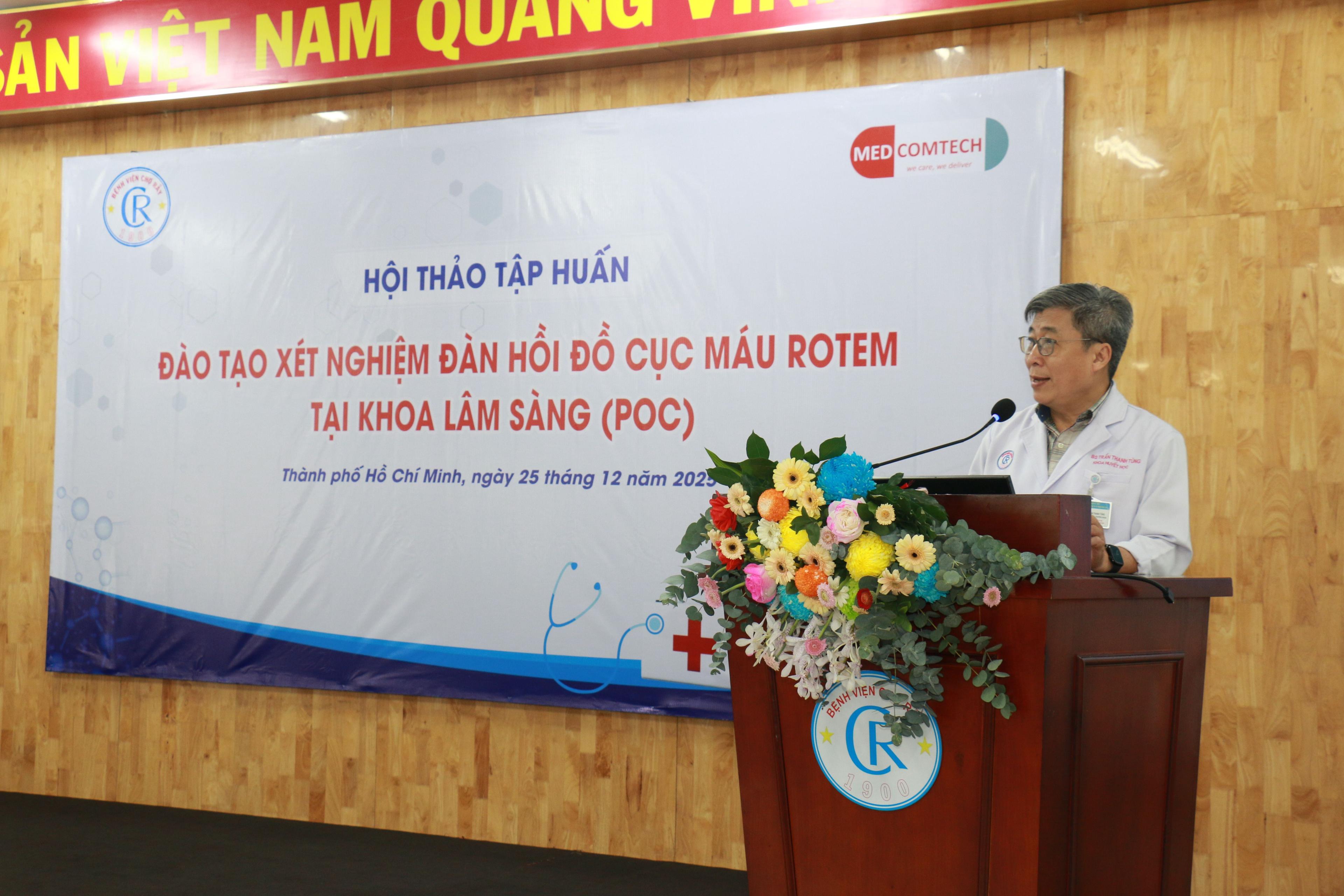
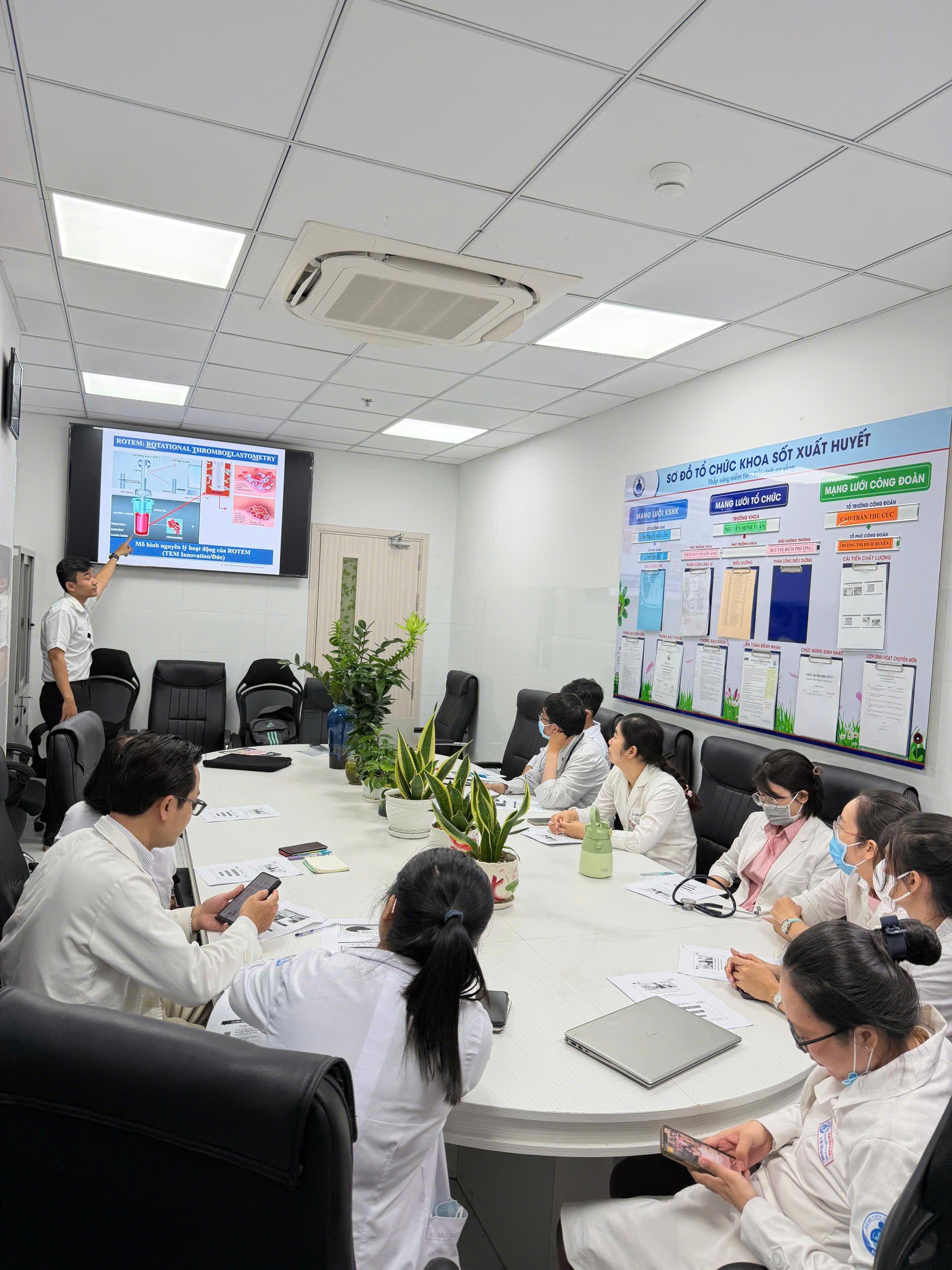
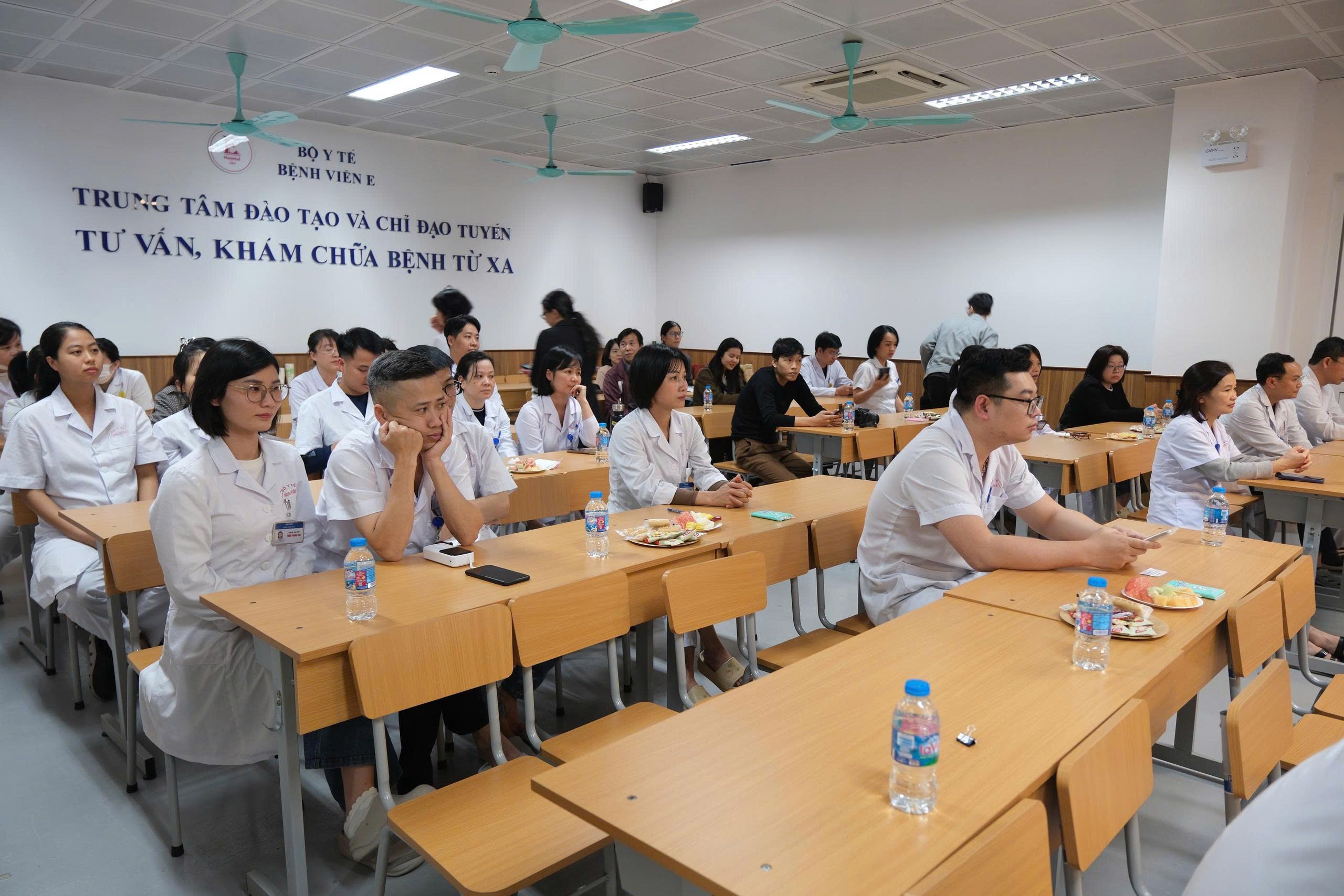
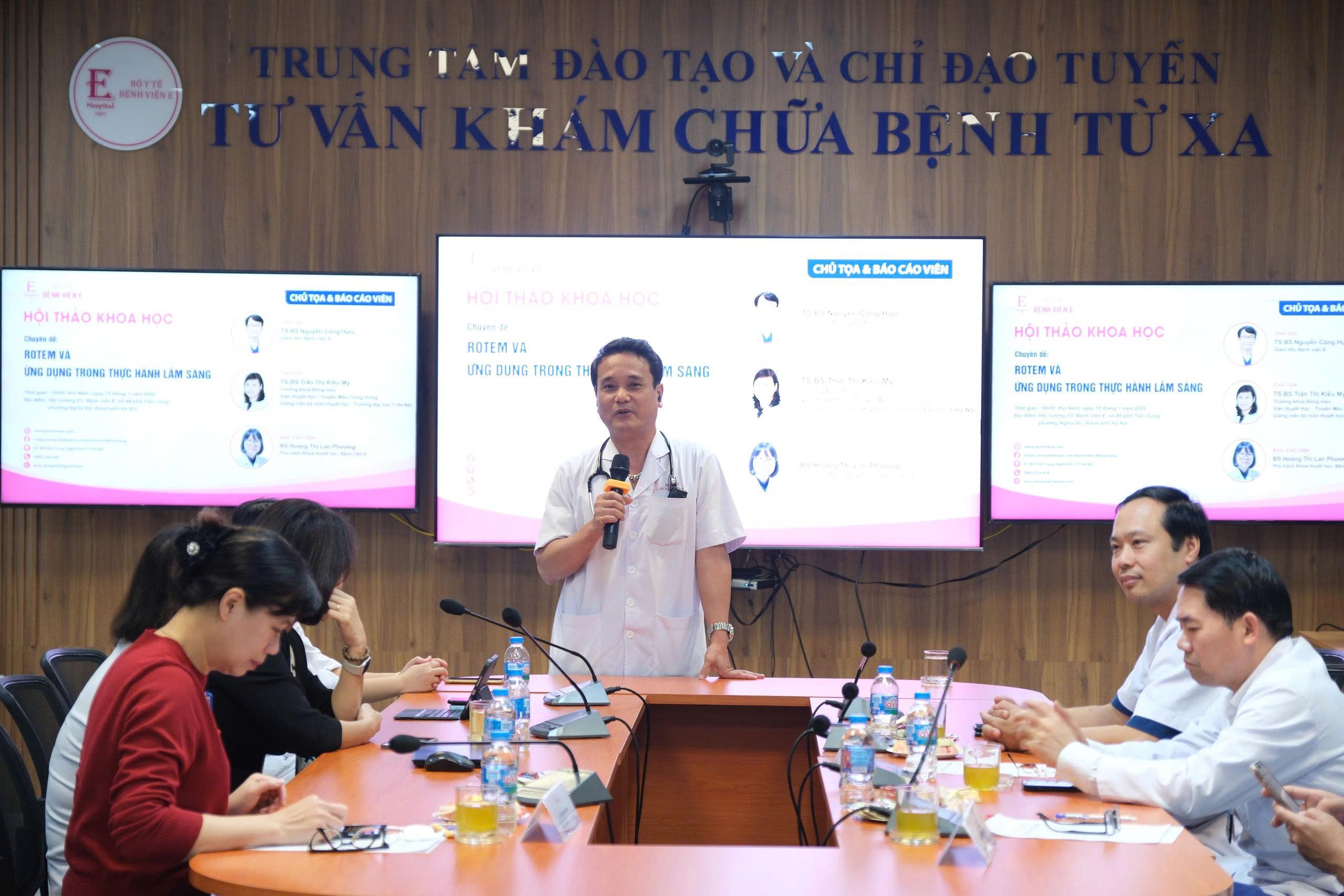
On the afternoon of January 15, 2026, E Hospital held a scientific symposium on the topic “ROTEM and its applications in clinical practice.” The symposium was conducted in both in-person and online formats, with participation from physicians and nurses of E Hospital as well as representatives from several other hospitals. The event aimed to enhance healthcare professionals’ expertise in ROTEM and its clinical applications.
Assoc. Prof. Dr. Nguyen Cong Huu, MD, PhD – Director of E Hospital, shared that introducing ROTEM testing into routine practice at E Hospital had been a challenging journey lasting nearly two years. Initially, despite having the equipment and reagents, effective implementation remained limited due to physicians’ established “habits” in ordering clinical tests and obstacles related to procurement and tendering of medical supplies and laboratory reagents. To address these issues, the hospital persistently strengthened communication efforts, repeatedly reinforcing the concept of ROTEM during morning clinical briefings, and applying it directly in severe cases, including polytrauma. To date, the technique has become deeply integrated into clinicians’ decision-making, helping shift treatment approaches from intuition-based, reflexive practice to accurate, evidence-based management. The hospital also committed to continued close collaboration with experts to update academic knowledge and new techniques in support of diagnosis and treatment, with the goal of achieving the best outcomes for patients.
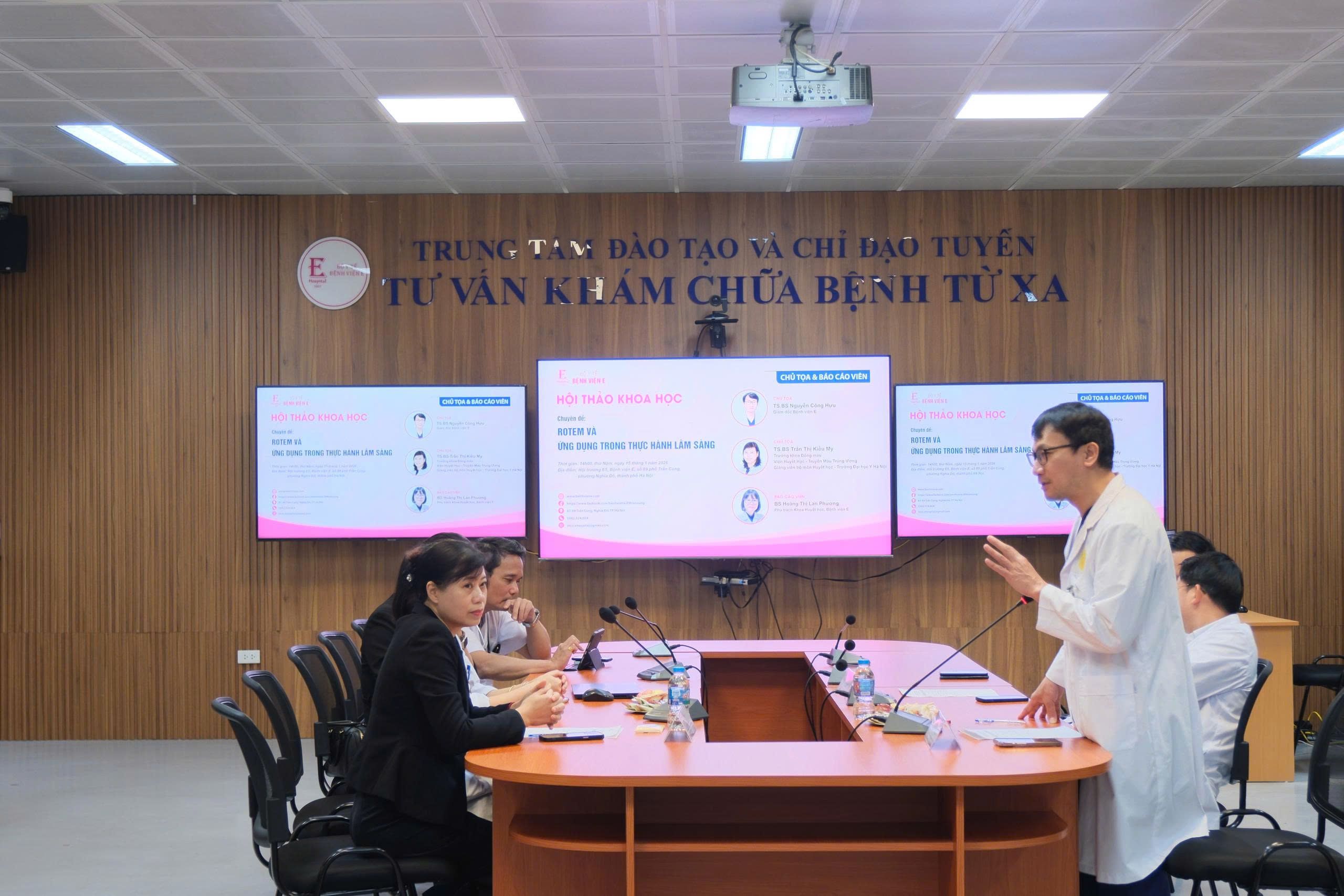
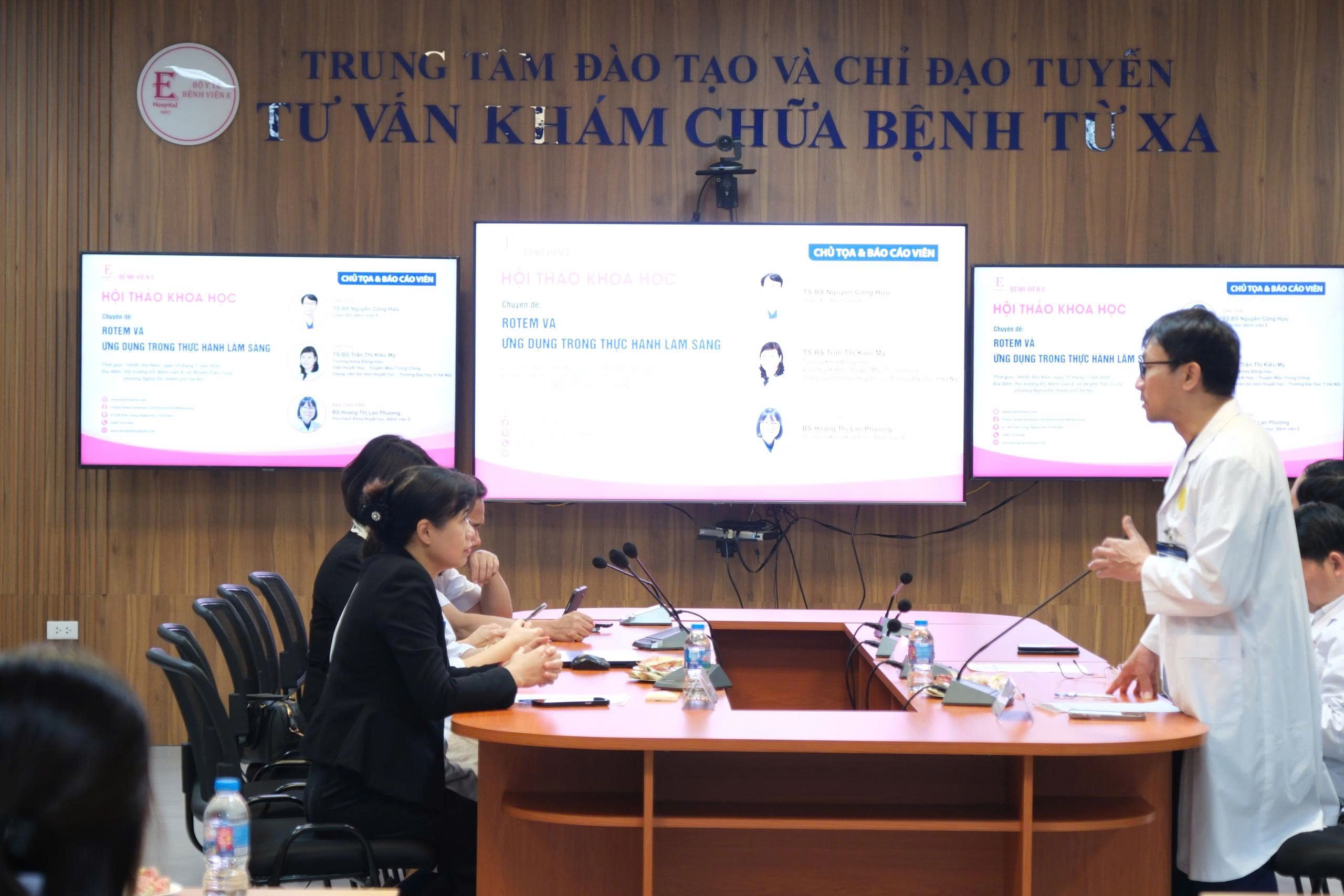
The symposium program included the following presentations: “Current use of ROTEM testing at E Hospital” by Dr. Hoang Thi Lan Phuong – Head-in-charge, Department of Hematology, E Hospital; and “Clinical applications of ROTEM” by Dr. Tran Thi Kieu My, MD, PhD – National Institute of Hematology and Blood Transfusion.
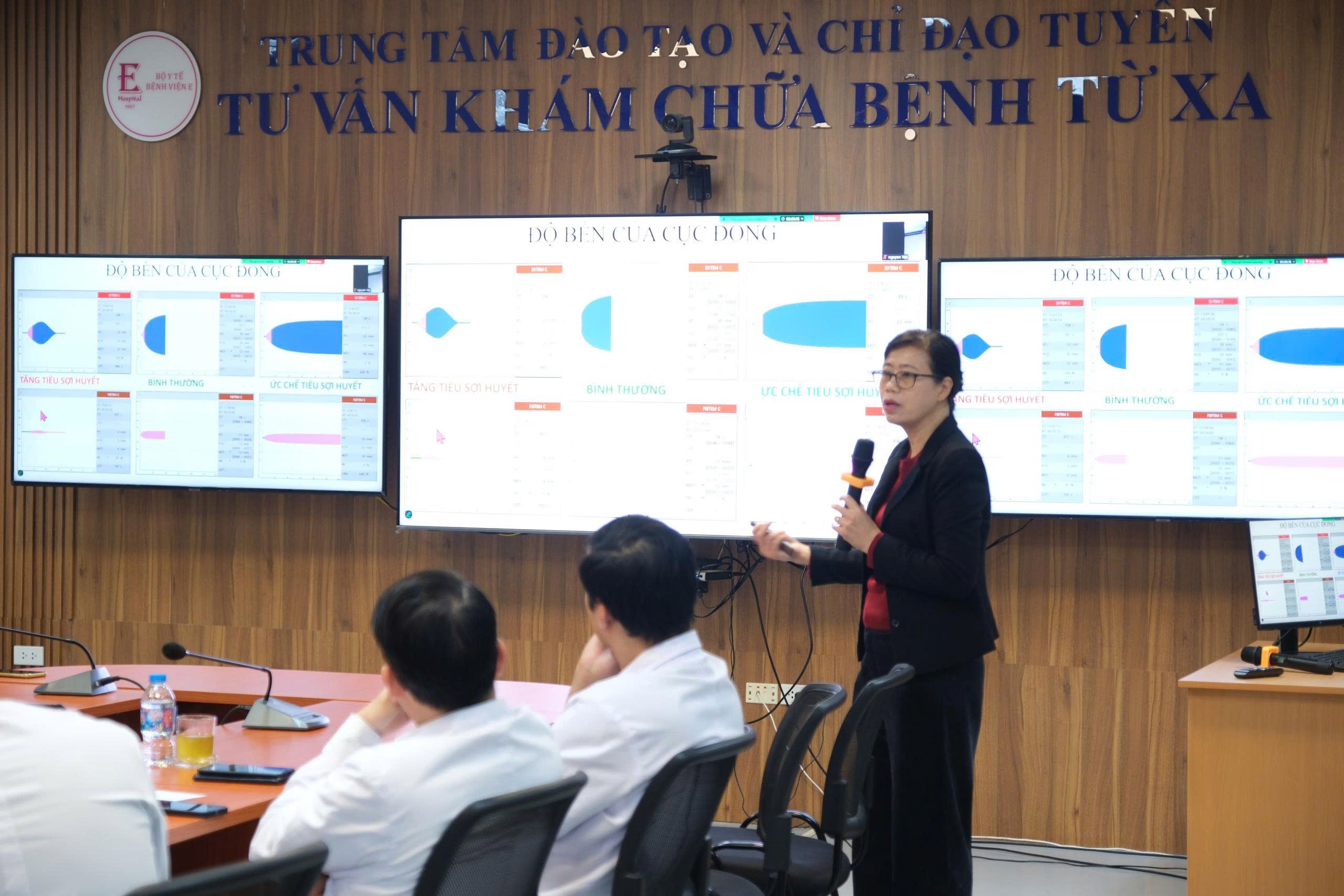
The discussion and Q&A session featured extensive exchanges and sharing of practical knowledge from clinical cases, as well as experiences from physicians and presenters. Many questions focused on challenges in indicating ROTEM testing to support diagnosis and treatment in severe and polytrauma cases across several departments at E Hospital.
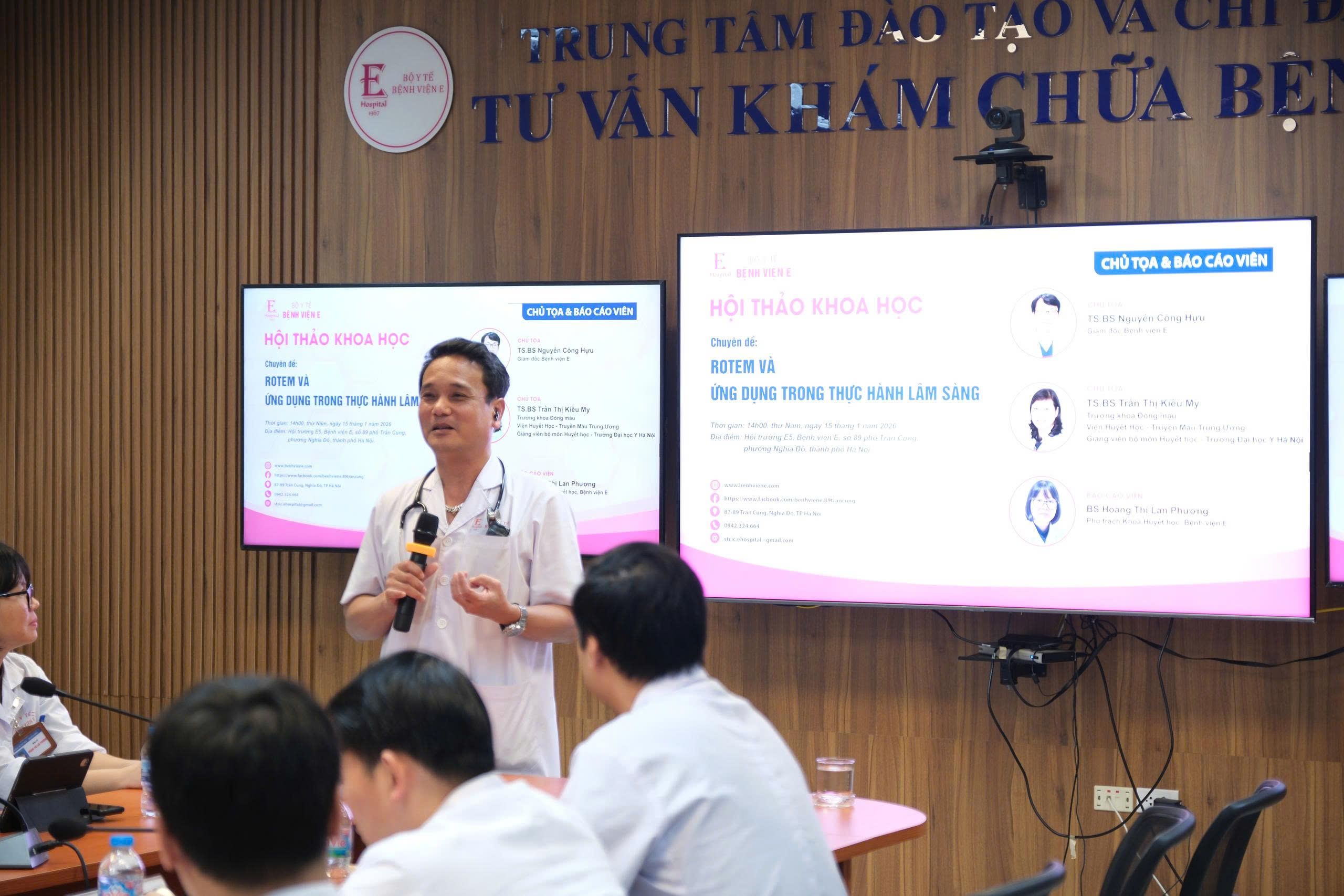
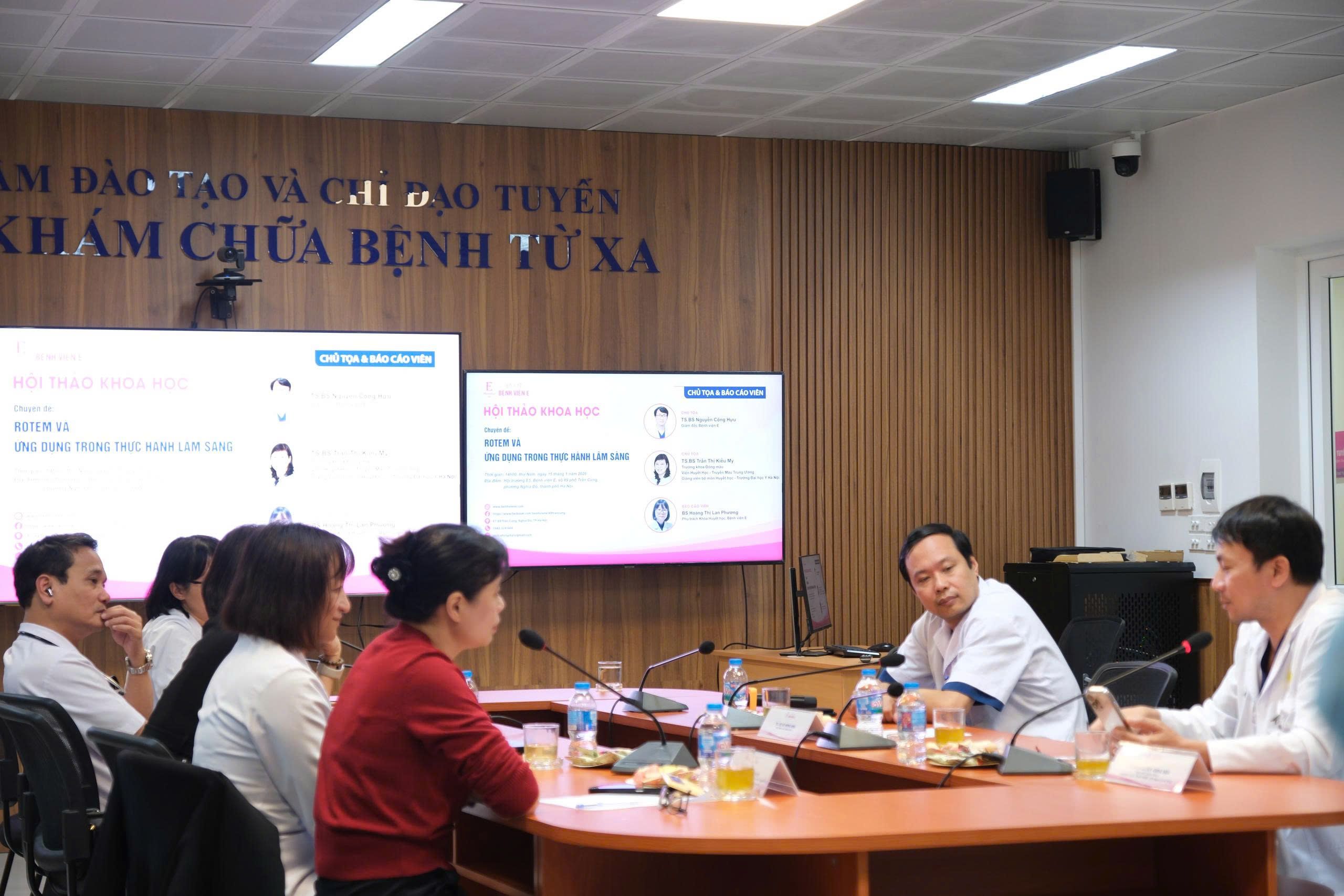
Dr. Tran Thi Kieu My, MD, PhD emphasized that ROTEM is particularly important and necessary for clinicians in Surgery, Anesthesiology and Intensive Care, and Critical Care, who directly manage complex clinical cases requiring rapid assessment of coagulation status.